
Circular Materials Hub Study
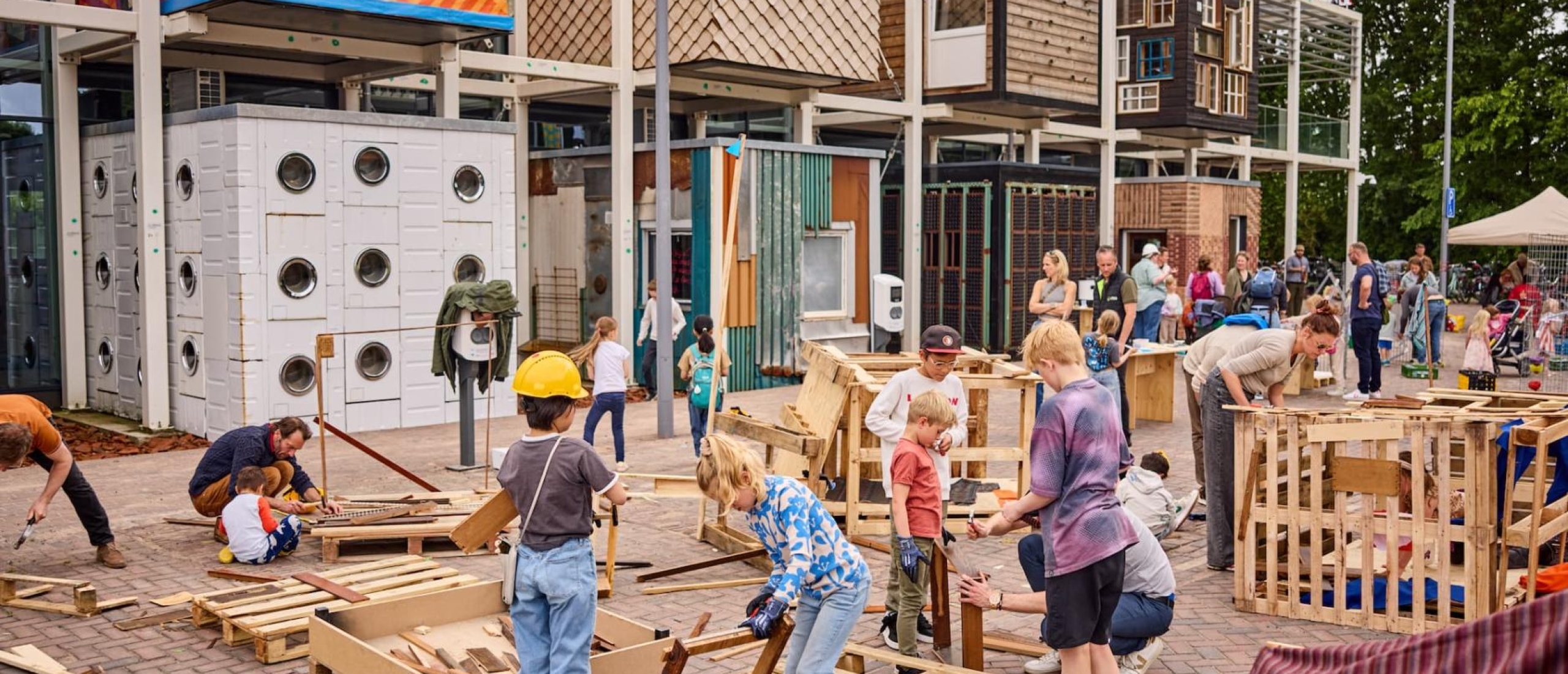
BLOC is working together with Stichting Keilekwartier, the Municipality of Rotterdam, and local entrepreneurs Placebased and Buurman to develop an adaptive circular materials hub in M4H.
Photo: De HER in Rotterdam, by Jan de Groen.
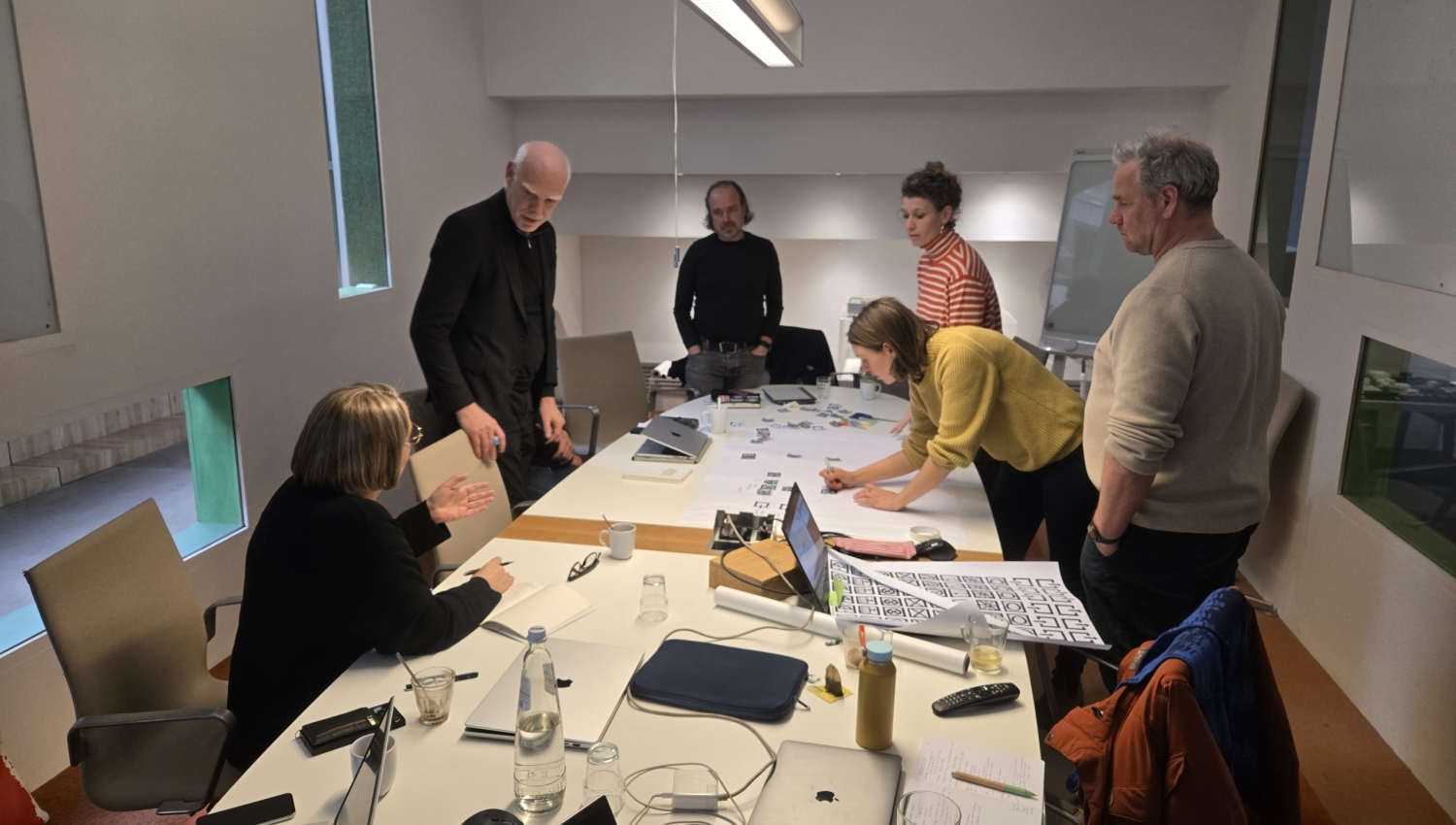
Material hubs are essential to circular area development. Beyond being a spatial challenge, they also raise strategic questions around governance and viable business models. BLOC, the Municipality of Rotterdam, Stichting Keilekwartier, Keilecollectief, Buurman, and Placebased are therefore working on an integrated collaboration model for hub De Start, located at the former municipal recycling site on Keilezijweg. The partners are exploring roles, ground rules, ownership structures, legal frameworks, and the business case. By linking public ambitions with local entrepreneurial expertise, we help turn circular goals into concrete implementation. At the same time, we are developing a model that can be replicated in other areas.
Why circular hubs are more of a strategic challenge than ever
Circularity is widely recognised as a necessary transition. There is no shortage of inspiring projects and products, yet scaling up and further development remain stubbornly difficult across many areas and value chains. The figures also show that progress is moving in the wrong direction: Dutch raw material consumption has actually increased since 2016, meaning we are not on track to reach the goal of becoming 100% circular by 2050 (PBL, 2025). The urgency to accelerate is therefore high. Circularity is no longer an optional innovation pathway, but a societal challenge that requires speed and decisive action. In practice, the main obstacle is rarely technology or a lack of ideas, but the system itself: agreements, roles, ownership, legal frameworks, and financial logic. This is why circular materials hubs are not traditional real estate or logistics projects, but fundamentally governance challenges. That is what makes this trajectory so important.
From a place to an adaptive system
De Start, located at the former municipal recycling site on Keilezijweg, is intended as both a test case and a starting point. The central question is collaboration and the rules of the game: ownership, contracts, legal frameworks, and the business case.
Together with multiple municipal departments (Urban Management and Urban Development), local entrepreneurs (Buurman and Placebased), and programme partners (Keilecollectief), we are working on an adaptive hub concept that will help bring the circular ambitions of the Area Ambition Document into practice.
This trajectory brings together two worlds: innovative public–private collaboration and circular area development.
We focus on developing a hub with the right conditions for sales, material flows, and other logistical requirements, enabling materials to circulate as locally as possible. Buffer capacity is essential in this context and must be organised in a way that prevents the hub from becoming an end point rather than a transition space.
This becomes even more complex in area developments where temporality is the norm: space is limited, contract durations are uncertain, and willingness to invest is therefore fragile.
That is why the development of circular hubs requires an adaptive business case and governance model — one that can strategically deal with temporary conditions. This is exactly what this project focuses on.
In practical terms, this means the model must be able to shift between different scales and spatial contexts. Local makers play a crucial role as carriers of culture, sources of innovation, and visible drivers of reuse. But they are not the full answer: achieving volume, continuity, and meaningful CO₂ impact also requires larger value-chain partners, logistical resilience, and professional processing and distribution capacity.
The key lies in designing a governance and business model: clear definitions of waste versus material, agreements on ownership transfer, responsibilities for quality and safety, and a distribution of costs and benefits that is workable for both public and private parties.
The role of BLOC
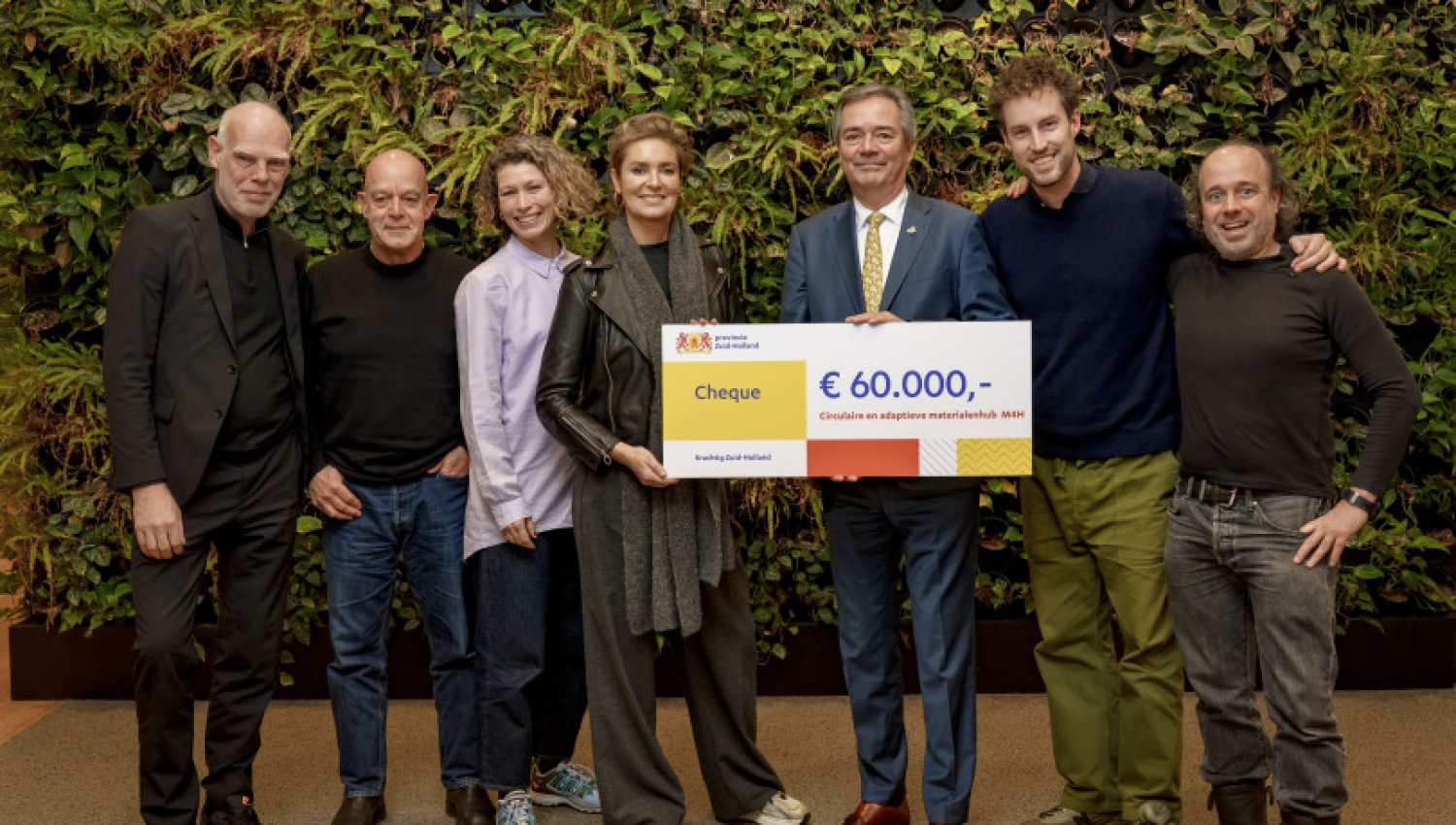
As the lead applicant for the subsidy, BLOC safeguards coherence and progress throughout the process, ensuring clarity of scope, a shared language, informed choices, and a strong connection between policy and practice. Because a circular hub brings together multiple logics (public goals, entrepreneurship, and area development), fragmentation and a piling up of separate deliverables can quickly emerge without clear coordination.
Together, we ensure that agreements on ownership, responsibilities, and legal compliance align with the operational reality of material flows and the entrepreneurs involved.
In doing so, we create the conditions for partners to excel in their respective contributions. Meanwhile, the trajectory safeguards momentum, quality, and decision-making power, working towards an adaptive and transferable hub model for all stakeholders.