Exploration of Recreational Gateways
Commissioned by the Municipality of Molenlanden, we are conducting an exploratory study into a network of recreational gateways to the Alblasserwaard. This network enables visitors to experience this distinctive polder landscape as a coherent whole. The study provides municipalities and partners with a shared framework to collaboratively steer towards quality, balanced visitor distribution, and long-term resilience.
Read moreThe Alblasserwaard is a region of exceptional landscape quality, strong communities, and a rich history. Yet it is still too often experienced as a collection of separate destinations rather than as one coherent area. For this reason, our Action Plan Alblasserwaard 2025–2027 introduced the concept of Gateways to the Landscape: recognisable entry points where visitors arrive, are inspired to explore further, and are encouraged to make use of local amenities. In this way, local businesses also benefit from visitor flows.
The Municipality of Molenlanden commissioned BLOC to translate this concept into a concrete and workable approach. Where are the most promising gateway locations? What should they offer? How can they function together as a network? And, equally important, how can multiple municipalities and partners jointly take ownership of this initiative? With the 750th anniversary of the Alblasserwaard in 2027 on the horizon, and funding opportunities such as the Province of South Holland’s Quality Impulse scheme in view, this is the moment to move from ambition to implementation.
Effective Gateways for a Strong Visitor Experience
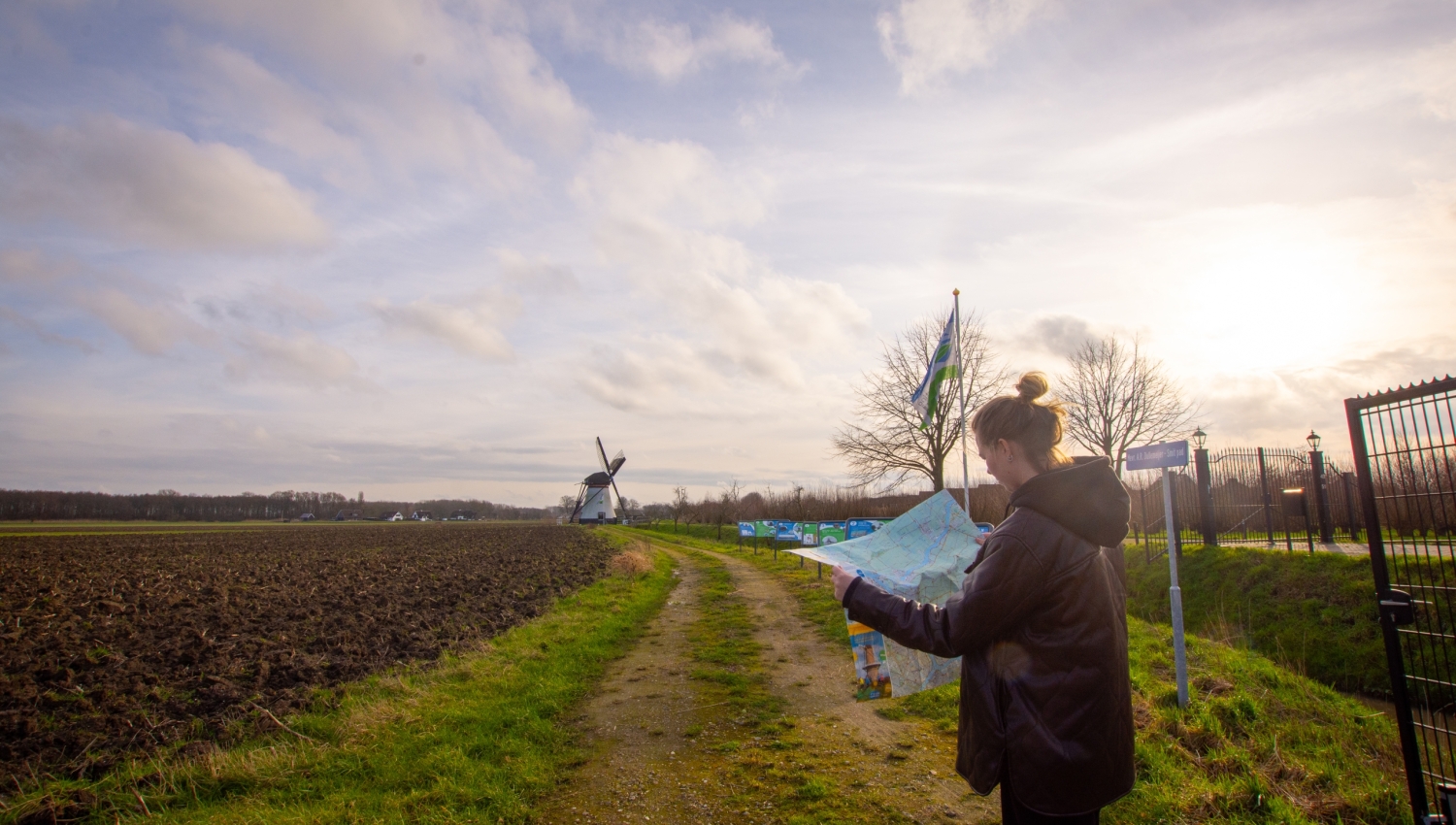
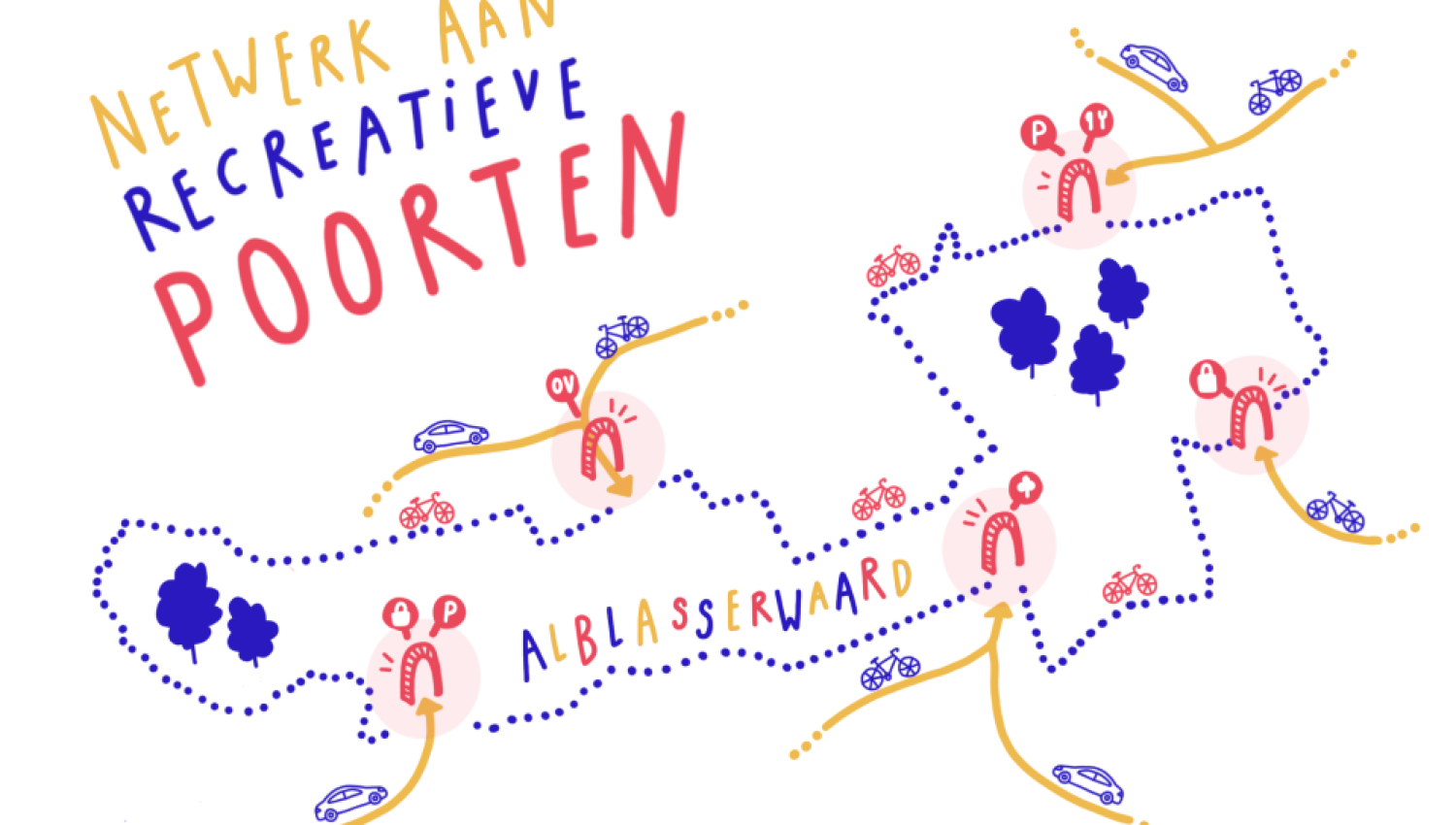
A recreational gateway is not an end in itself, but a means tailored to a specific target group and location: a place where visitors can transfer from car or train to, for example, a bicycle; where routes converge; where information is clear and consistent; and where, at a glance, you understand what the region has to offer in terms of amenities and experiences.
Phasing
In the first phase, we organise inter-municipal alignment. We engage with the municipalities in the region and other key partners to clearly define the relevant target groups and the spatial conditions related to landscape, management, and accessibility. This results in a shared framework and a longlist of relevant and promising locations.
Next, we develop a modular gateway concept. Each location typically has its own level of ambition and specific boundary conditions. We therefore work with a tiered approach: from a basic variant featuring clear signage and route information to fully developed mobility hubs with amenities and experiential elements. Particular attention is given to the region’s network logic: where do visitors enter by public transport or by water? Where do infrastructures such as the A15 create barriers? And where is additional guidance needed to draw visitors into the landscape? In this way, gateways become components of a coherent regional system rather than isolated interventions.
To support decision-making, we apply a transparent assessment framework developed jointly with the client and partners. We assess factors such as the impact on visitor distribution and length of stay, the quality of accessibility and transfer options, opportunities to connect with existing routes, added value for local businesses, organisational capacity, and landscape integration. This leads to a broadly supported shortlist, including a preferred variant for each gateway and a clear pathway towards implementation in 2026–2027.
Deliverables
The outcome is a concise and policy-ready exploratory study that can be used directly for decision-making and funding applications. It includes compelling maps and development scenarios, providing a solid basis for clear agreements on organisation, roles and responsibilities, and financing.
Its added value lies not only in the adaptive spatial design of the gateways, but above all in the integration of strategy, governance and implementation.